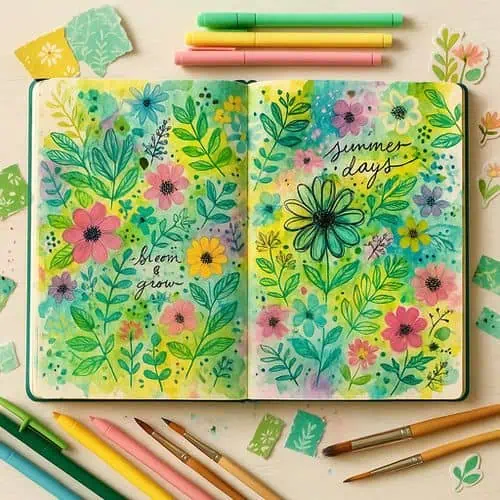
If you’ve ever found yourself sketching in the garden, sticking a receipt onto a page, or layering washi tape without any particular plan… that’s summer art journaling, and you’re already doing it.
Disclosure: If you purchase anything from links in this post or any other, I may receive some kind of affiliate commission. However, I only ever mention products I love and would recommend regardless of commission.
Disclosure: I’m not a mental-health or medical expert, I just share what I’ve learned through my own research and experience. The ideas and prompts here are meant to help you reflect and grow, but they’re not a replacement for professional advice. You can read my full disclaimers here.
You don’t need to be good at art to enjoy it. The point isn’t to make something beautiful; it’s to capture how the season actually feels using colour, texture, and whatever’s lying around. This post has ideas and supplies to get you started, whether you’re brand new to it or just looking for a fresh direction.
What Is Summer Art Journaling?
Summer art journaling is a visual way to capture the season: using colour, shape, texture, and found objects instead of (or alongside) words. Think pressed flowers from a walk, a collage of ticket stubs and wrappers, paint swatches pulled from a sunset. It sits somewhere between visual journaling and scrapbooking, and there’s no right or wrong way to do it.
What makes it worth trying in summer specifically is how much the season gives you to work with: bright colours, outdoor textures, found objects, and a bit more time to play.
Easy Art Journaling Supplies to Get Started
You don’t need a fancy art kit to get started with summer art journaling. Some of the best pages come from whatever’s already lying around. A few useful things to have:
- A sketchbook, notebook, or even loose paper – remember that thicker paper will handle heavier paints or collage items better.
- Coloured pencils, markers, or watercolours
- Magazines, travel brochures, or old maps for collage
- Glue stick or tape
- Stickers, washi tape, or scrap paper
- A small bag or envelope for collecting found items (leaves, receipts, wrappers, etc.)
- Optional: flower press, photo printer, or stamps if you want to get fancy
It’s not about having the “right” tools — it’s about using what you have to explore how summer feels to you.
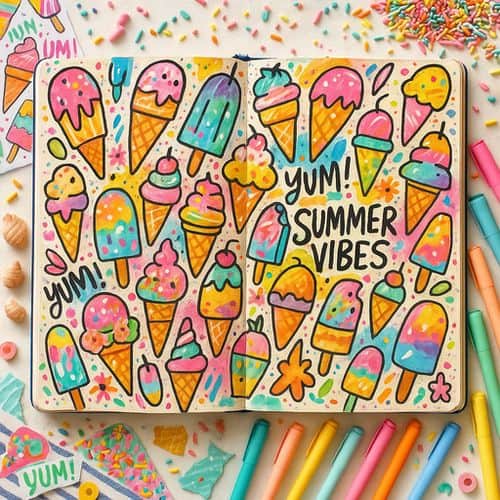
Summer Art Journaling Ideas to Try
Here are some low-pressure ideas to get you started. Pick one, mix a few, or use them as a jumping-off point:
- Create a summer colour palette. Pick 3–5 colours that feel like your summer. Use paint swatches, magazine scraps, or coloured pens.
- Collage a memory from this week. Use scraps, receipts, doodles, or handwritten fragments to tell the story.
- Illustrate your ideal summer day. It doesn’t have to be realistic, just something that makes you smile.
- Make a weather page. Record a week of weather using drawings, colour blocks, or textures.
- Art-journal your summer playlist. Choose a song and draw how it feels, not what it says.
- Use natural elements. Press flowers, make leaf prints, or rub crayons over bark or paving stones.
- Make a mood tracker with summer icons. Suns, waves, sunglasses, fruit… use one daily to reflect your feelings.
- Decorate a page with found papers. Bus tickets, food wrappers, packaging from something summery (anything goes).
- Draw your favourite summer drink. Add labels, ingredients, or just the colours that remind you of it.
- Document a day using only visuals. No words…just marks, shapes, and scraps that reflect the vibe.
What If You Don’t Feel Creative?
Some days inspiration just isn’t there. The trick is to lower the bar rather than wait for it to come back:
- Swatch some colours… no purpose, just see what they look like together
- Stick down a few scraps or washi tape and see what happens next
- Copy a shape or pattern from something nearby
- Trace around your hand, your coffee cup, or a leaf
- Pick one colour and fill a whole page with it, however you like
Summer art journaling isn’t about producing something. It’s about giving yourself space to notice what’s around you, even on the days when you’re not feeling it.
My Summer Journaling Toolkit
- Lay-flat softcover journal – easy to write in whether you’re indoors or at the park
- Spiral-bound sketchbook – perfect for art journaling, collages, or visual memory maps
- Dot grid notebook – ideal for people who like freedom but want a bit of structure for layouts or playlists
- Multicolour gel pens – ideal for mood journaling or differentiating between topics
- Pastel highlighters – soft colours for underlining lyrics, drawing attention to memories, or decorating pages
- Fine-tip markers – great for doodles, headings, or summer-inspired colour palettes
- Mini portable photo printer – print summer photos straight from your phone
- Washi tape set (summer-themed) – add colour or hold down found objects like tickets or leaves
- Sticker pack for journaling – look for ones themed around travel, nature, or seasons
- Zippered journaling pouch – to carry your supplies in your beach bag or picnic backpack
- Compact lap desk – makes journaling easy from a park bench, porch swing, or campsite
- Reusable water bottle with time markings – not journaling-specific, but self-care is important
Give Summer Art Journaling a Try
The best thing about summer art journaling is that there’s genuinely no wrong way to do it. A page full of washi tape and a stuck-in ice lolly wrapper is just as valid as something carefully painted and composed.
Let your pages reflect the season as it actually is: bright, a bit chaotic, occasionally a bit half-finished. That’s what makes them worth looking back on.
Disclosure: If you purchase anything from links in this post or any other, I may receive some kind of affiliate commission. However, I only ever mention products I love and would recommend regardless of commission.
Disclosure: I’m not a mental-health or medical expert, I just share what I’ve learned through my own research and experience. The ideas and prompts here are meant to help you reflect and grow, but they’re not a replacement for professional advice. You can read my full disclaimers here.