
As you know, I journal regularly, so it’s not a huge surprise that I firmly believe in the merits of a positive journal. But what is a ‘positive journal’, how is it helpful, and how do you start one?

Disclosure: If you purchase anything from links in this post or any other, I may receive some kind of affiliate commission. However, I only ever mention products I love and would recommend regardless of commission.
Disclosure: I’m not a mental-health or medical expert, I just share what I’ve learned through my own research and experience. The ideas and prompts here are meant to help you reflect and grow, but they’re not a replacement for professional advice. You can read my full disclaimers here.
Positive journaling is the process of reflecting on your thoughts, recognising gratitude, and celebrating the bright spots in your life. By recording your thoughts and feelings, you’re training your mind to look for and appreciate positivity—ultimately building a healthier outlook.
I’ve found journaling a grounding habit and one that I highly recommend.
How A Positive Journal Works For Mental Well-Being
Research has shown that positive thinking and gratitude can have a huge impact on our well-being, both physically and mentally (Sansone RA et al., 2010.). By focusing on uplifting thoughts, memories, and affirmations, we activate the brain’s reward centres, encouraging the release of dopamine and serotonin—our “feel-good” chemicals.
Taking time to write down our thoughts in a positive journal helps reinforce these positive pathways in the brain, helping to reframe the way we see things. We start to recognise the good, even if life feels overwhelming.
I’ve found it very useful for stress relief, too.
You might find this interesting if you want more on the science stuff!
Promoting Personal Growth And Self-Awareness
Another aspect of positive journaling I particularly appreciate is how it can help you build a clearer picture of yourself—who you are and what matters most.
Looking back through your journal entries, you will quickly see patterns of growth, which can be incredibly motivating. It can also help you see which goals to tackle next.
Journaling can help you gain a powerful sense of deepened self-awareness, which can boost your self-confidence.
Picking Your New Positive Journal And Setting It Up
Starting a positive journal is easier—and more enjoyable—when it feels personal, so I will give you some ideas on form and method for starting your journal.
Top Tip—Pick something that feels authentic and inspires you to write.
Choosing The Right Medium: Digital Vs. Physical Notebooks
To be clear, there is no right or wrong format for your positive journal. You can pick something digital or physical. If I were to give you advice, I’d say, “Pick something that feels natural and don’t be afraid to try both for a while. See what works.”
So, what’s the difference between digital and physical journaling?
- Digital journals: Digital journaling is great if you prefer to organise your thoughts and add to them as you go. Journalers use apps or note-taking platforms like Evernote, Notion, Milanote or Day One are all platforms journalers use. What’s great is that you can add photos, tags, and even password protection, making it easy to organise and keep your entries private.
- Physical notebooks: A physical journal might be better if you love the tactile experience of writing by hand. I find that it can slow down your thought process, making journaling a calming ritual that helps you decompress after a long day.

Making Your Journal Feel Personal And Inviting
Creating a journal that feels special to you can make the habit of journaling more enjoyable and sustainable. And there are so many options to help you make that experience inviting.
You could:
- Make your journal something you love to use: Whether that’s customising your app layout and feel or choosing a notebook you’ll love the experience of writing in (not just the look, but the actual writing sensation).
- Add decorative elements: Personalise your journal with decorations, such as stickers, washi tape, or coloured pens. If you use a digital app, why not add photos, change your fonts, or create interactive lists?
- Set the mood to create a journaling routine: Establish a ritual around your journaling practice to create a routine you’ll want to keep up. Try making yourself a hot cup of coffee, lighting a candle, or playing calming music.
When your journal reflects your personality, you are more likely to feel drawn to it regularly, turning it into a space where positive reflections come naturally.
How To Get Started With Positive Journaling
Okay. You have your positive journal or app and want to get started. How often and for how long should you write?
First of all, let’s abandon the concept of a rule book. There isn’t one. You will quickly find that how regularly and for how long you choose to write will vary with every entry. Some days, you might make multiple entries, and sometimes, only a few a week. And that’s okay. Instead, you should aim for a sustainable habit that helps you build a healthier and happier mindset.

How Often Do People Write In Their Positive Journals?
When you are looking for positive journaling inspiration online (or here on my blog because I have lots to sink your teeth into!), you will often read about daily, weekly or monthly prompts.
Don’t worry; you won’t be expected to keep up with everything, and as I say, you will want to find a routine that suits you. But if you want to understand why you might choose to journal daily, weekly, or monthly, here are my thoughts.
- Daily journaling: Writing every day can help you build a strong habit and maintain a consistently positive mindset. A few minutes each morning or evening can set a tone of gratitude and reflection that will influence your whole day.
- Weekly journaling: If daily journaling feels too much, try setting aside time once a week. A weekly session allows you to look back over the week and focus on highlights, meaningful moments, and personal wins.
- Monthly journaling: Use a monthly schedule for reflection. Take time to read what you’ve written that month, and take a page to brain-dump your thoughts. A monthly session will help you keep track of goals and adapt to change.
Remember that there is a benefit to keeping things flexible. The last situation you want to find yourself in is a journaling practice that overwhelms you.
Read this for a beginners guide on positive thinking journals
Tips For Maintaining Consistency Without Feeling Forced
To help me maintain consistency, I do the following:
- Start small: Start with just a sentence or two. For example, write down one thing you’re grateful for each day or jot down a single positive experience. Starting small takes the pressure off and gradually builds a habit.
- Set a reminder: Place your journal somewhere visible, like on your bedside table or your work desk, as a gentle reminder. Some people like to set a daily or weekly alarm to journal at a consistent time.
- Make it enjoyable: Create a journaling space or routine that feels like a treat.
- Allow flexibility: If you miss a day or a week, don’t worry. Simply pick up where you left off. Positive journaling is about self-compassion, so allow yourself room to grow without guilt.
Where To Find Inspiration When You Just Aren’t Feeling It
There will always be moments when you stare at a blank page, and nothing comes. I have some prompts below for those moments when you are really stuck or just getting started. But where do you find inspiration in the everyday—even the ordinary ones?
While not every day is remarkable, there will always be moments of gratitude. Maybe someone gave you their seat on the train. Perhaps a child waved at you from a car. Or a colleague congratulated you on a job well done. How does that positivity make you feel? How do you intend to pass that on? These are great places to start putting pen to paper.
Maybe you’ve had a bad day and need some positivity to lift you up. Write down what you’ve learned, what you want to change and how you will make tomorrow better. There’s a real opportunity for growth here.
If you want to explore other types of journaling, you might like this post.

Prompts to Start Your Positive Journal
Here are some of my favourite beginner prompts to help you begin each journaling session with positivity and intention.
Self-Affirmation Prompts
Self-affirmation prompts encourage you to recognise your strengths and celebrate your personal qualities. Writing down these affirmations reinforces a positive self-image and stops self-doubt.
Try:
- What are three qualities I love about myself today?
- Describe a recent accomplishment or moment you’re proud of and why it mattered.
- Write down a positive affirmation you need to hear right now.
- List ways in which you’ve shown kindness or support to others recently.
Reflecting on Strengths and Growth
Developing your journaling repertoire to include reflection is a powerful way to track personal progress and develop a habit of continual improvement.
Try:
- What challenges have I overcome recently, and what strengths did I use?
- How have I grown in the past month? What’s something I’ve learned or improved?
- What skills, qualities, or talents am I grateful for today?
- Write about a recent situation where you had to do something different. What did you learn?
Positive Memory Prompts
Recalling happy memories is a beautiful way to end or start the day. They help you focus on gratitude and joy.
Try:
- What moment today (or this week) made me happy?
- Describe a recent experience that brought you peace. Why was that special?
- Recall a happy moment from the past. What stands out most about that memory?
Expanding Your Positive Journal Beyond Words
Words are powerful, but sometimes, feelings, memories, and positivity are best expressed in other forms. Adding visuals, colours, and creative elements to your positive journal can be a great way to channel thoughts and feelings.
Here are a few ideas to help you create something more visual and tactile in your positive journal.
Incorporate Doodles, Sketches, Stickers, Washi Tapes Collectables Or Photographs
Don’t be afraid to let your inner artist out. And don’t worry about perfection. Just allow yourself the time and space to enjoy recording your special moments.
You could sketch a small sun for a great day outdoors or a coffee cup to remember a cosy moment with a friend. You could include photos of memorable moments, people, or places that bring you joy. You could use stickers, washi tapes or collectables like receipts to highlight and remember trips or milestones.
Brightening your journal with other mediums can make the experience more compelling (even if you prefer to journal digitally). Remember, colour is your friend—it makes journaling more fun!
Positive Journal Page Themes: Should you or Shouldn’t you?
There’s no strict rule that your writing has to start on page one and finish at the end of your positive journal. You can split your notebook or digital journal into themed pages or daily, weekly, or monthly layouts.
The important thing is that you can capture your thoughts, feelings and positive moments naturally.
My advice if you are starting or returning to positive journaling is to keep it simple. First, focus on forming a habit around journaling. Make it fun. Make it easy. Once your new habit has stuck, you can experiment.

Positive Journals: A Wrap-Up
Starting a positive journal is a great way to nurture a mindset of gratitude, resilience, and self-awareness. It can be quite transformational.
By focusing on the positive aspects of your life—whether through affirmations, memories, or visual elements—you are actively rewiring your brain to recognise joy, growth, and appreciation in the everyday.
Treat your positive journaling experience as a practice that feels authentic and supportive to you. You will be rewarded with a greater sense of well-being.
Further reading:
- Journaling for Goal Setting and Manifestation
- Journaling Techniques for Boosting Self-Esteem
- The Role of Gratitude in Positive Journaling
Grab the Positive Journaling Printables
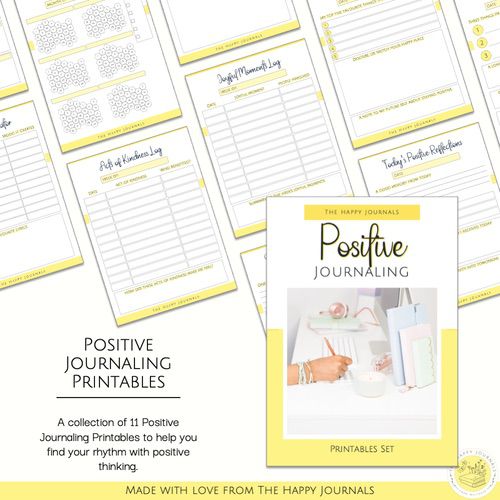
This new collection of 11 Positive Journaling Printables has been designed to help you find your rhythm with positive thinking.
Here are a few of the printables you’ll get: Gratitude Highlights, Self-Appreciation Snapshot, Goals & Aspirations Sheet, The Happiness Map, Today’s Positive Reflections, Daily Affirmations Tracker
Disclosure: If you purchase anything from links in this post or any other, I may receive some kind of affiliate commission. However, I only ever mention products I love and would recommend regardless of commission.
Disclosure: I’m not a mental-health or medical expert, I just share what I’ve learned through my own research and experience. The ideas and prompts here are meant to help you reflect and grow, but they’re not a replacement for professional advice. You can read my full disclaimers here.