
What is positive journaling? A positive journal is a personal space where you record uplifting thoughts, experiences, and reflections. The idea is to focus on the positive aspects of life, such as gratitude, achievements, joyful moments, and lessons learned.
Is the science of positive journaling a real thing? Well, yes. Studies have shown that keeping a journal, particularly a positive journal, influences the brain and uplifts our emotional thoughts and well-being.

Disclosure: If you purchase anything from links in this post or any other, I may receive some kind of affiliate commission. However, I only ever mention products I love and would recommend regardless of commission.
Disclosure: I’m not a mental-health or medical expert, I just share what I’ve learned through my own research and experience. The ideas and prompts here are meant to help you reflect and grow, but they’re not a replacement for professional advice. You can read my full disclaimers here.
The Science of Positive Journaling
The truth is, positive journaling is grounded in neuroscience and psychology. Here’s how it works.
1. Neuroplasticity: Rewiring For Positivity
Your brain is constantly changing, thanks to a phenomenon called neuroplasticity. This is the brain’s ability to adapt and form new neural connections. When you journal about positive experiences or emotions, you actively train your brain to spot and amplify these patterns. Over time, your mind resets to a more positive default.
In the nursing industry, evidence has shown that journaling as self-care reduces burnout rates (M. Hall Morris. Write It Out! CPR for the Soul. Nursing Clinics, Volume 55, Issue 4, 475 – 488.)
2. The Dopamine Boost: Your Brain’s Reward System
Positive journaling also triggers the release of dopamine, a neurotransmitter often called the “feel-good chemical.”
How does it work? When you write about happier moments, you start to feel good. As a result of a dopamine hit, you seek more of that feeling, creating a rewarding feedback loop in your brain each time you write.
Every time you revisit that feeling, you boost your motivation, lighten your mood, and actively seek more positivity in your life.

3. Calming The Amygdala: Less Stress, More Clarity
The amygdala is the brain’s stress centre, triggering fight-or-flight responses. Daily journaling can help you destress after a stressful situation or take the fight-or-flight risk out of something you know will trigger you. Why? Because you are calming your mind and becoming more constructive in how you approach things.
That act of positivity has been shown to have an uplifting effect on our physical and emotional well-being (Mayo Clinic).
4. Processing Emotions Through Reflection
Journaling helps you organise your thoughts and emotions, turning abstract feelings into tangible words. By doing so, you are much more able to problem-solve because you have a clearer perspective.
Research by Dr James Pennebaker found that writing about feelings and thoughts can also help people deal with traumatic experiences (Pennebaker et al. 1986.).

What Positive Journaling Can Do For Your Mindset
Once you understand how journaling affects the brain, it becomes easier to see how it can transform your mindset. For example, if you keep a daily positivity journal, you will:
- Switch scarcity to abundance: We seem naturally predisposed to focus on problems and what’s missing in our lives. By keeping a positive journal, you have to focus on what you have rather than what you lack.
- Turn challenges into opportunities: By organising our thoughts and reflecting on our feelings with a positive slant, we are much more likely to spot growth or the potential to grow.
- Build self-confidence and self-esteem: Recording your wins or happy moments helps you track your progress and strengths, highlighting your capabilities and empowering you to tackle bigger goals.
- Create mindful and self-care practices: Journaling can help you be present in the moment and appreciate life better. It can also force you to slow down and reduce overthinking.
How The Science of Positive Journaling Helps Us Be Better Journalists
When you can see the benefits that the science of positive journaling shows us, it makes you stop and ask, “How is my journaling technique helping me feel more positive?” “How is it serving me?” “How can I build a better practice?”
These questions are incredibly important. They help us build a better self-care routine through journaling, focusing on a deeper understanding of its potential. This, in turn, makes us more self-aware journalists.
Disclosure: If you purchase anything from links in this post or any other, I may receive some kind of affiliate commission. However, I only ever mention products I love and would recommend regardless of commission.
Disclosure: I’m not a mental-health or medical expert, I just share what I’ve learned through my own research and experience. The ideas and prompts here are meant to help you reflect and grow, but they’re not a replacement for professional advice. You can read my full disclaimers here.
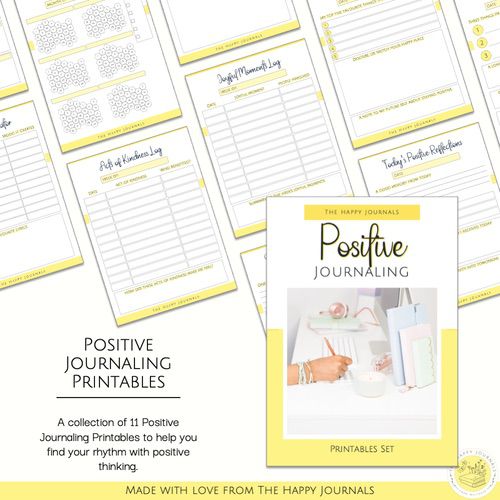
Grab the Positive Journaling Printables
This new collection of 11 Positive Journaling Printables has been designed to help you find your rhythm with positive thinking.
Here are a few of the printables you’ll get: Gratitude Highlights, Self-Appreciation Snapshot, Goals & Aspirations Sheet, The Happiness Map, Today’s Positive Reflections, Daily Affirmations Tracker