Let’s talk about something that might make your high school years a bit easier: journaling. Writing in a journal might sound old-school or even a bit boring, but trust me, it’s a super useful tool for managing your well-being. Today, I want to look into the question of how can journaling help anxiety and give you some journaling activities for teens to get started.

Disclosure: If you purchase anything from links in this post or any other, I may receive some kind of affiliate commission. However, I only ever mention products I love and would recommend regardless of commission.
Disclosure: I’m not a mental-health or medical expert, I just share what I’ve learned through my own research and experience. The ideas and prompts here are meant to help you reflect and grow, but they’re not a replacement for professional advice. You can read my full disclaimers here.
What is Anxiety?
First things first, let’s break down what anxiety actually is. Anxiety is that uncomfortable feeling of worry, fear, or unease. It’s something we all experience occasionally, but it can be a daily struggle for some high school students. Common symptoms include:
- Feeling nervous or restless
- Increased heart rate
- Difficulty concentrating
- Trouble sleeping
- Feeling a sense of impending danger or panic
Journaling for Mental Health
Simply put, journaling is the practice of writing down your thoughts, feelings, and experiences. It’s a form of expressive writing that can help you better manage your emotions. I think of it as a conversation with myself where I can be completely honest and open.
When it comes to mental health, journaling has some awesome benefits:
- Reduces Stress: Writing about your feelings can be a huge relief. It’s like unloading a heavy backpack.
- Helps Identify Triggers: By tracking what makes you anxious, you can start to notice patterns and triggers.
- Promotes Mindfulness: Journaling encourages you to be present and mindful, which can help ground you when your thoughts are racing.
According to Dr. James Pennebaker, a leading researcher in expressive writing, “Writing about emotional experiences not only helps in processing those experiences but also improves mental health outcomes.”
So, if you’re dealing with anxiety, why not give journaling a try? It might just be the tool you need to feel more in control and less overwhelmed.

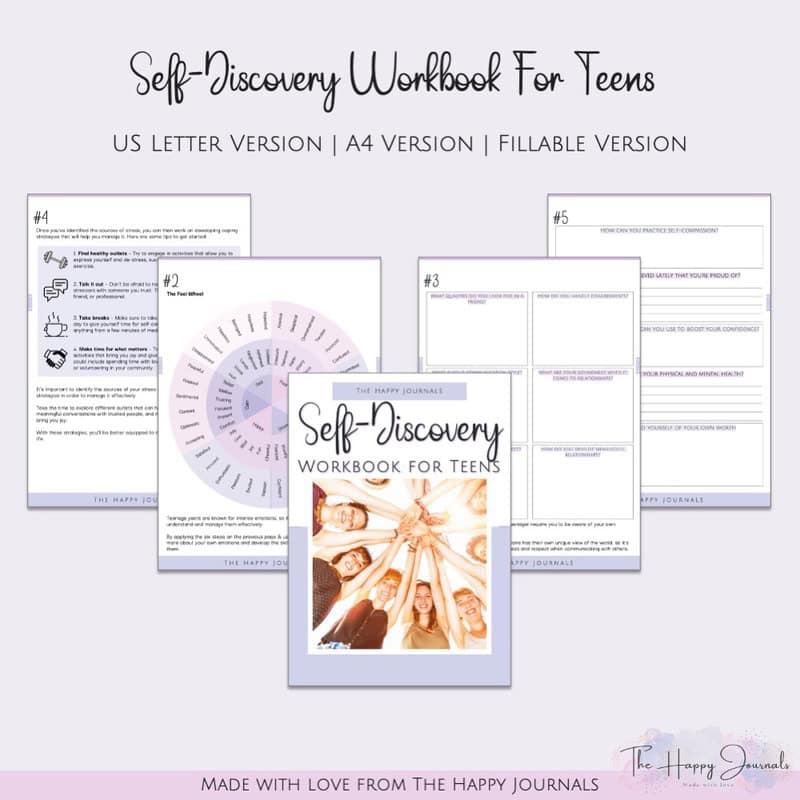
Grab the Self-Discovery Workbook For Teens
This workbook has been designed to guide your teens through a process of self-discovery and to help them gain an understanding of themselves.
In this workbook, we will explore topics including: Setting boundaries, your emotions, positive relationships, identifying stressors, knowing your worth, exploring strengths and weaknesses, and success goals.
How Can Journaling Help Anxiety?
When it comes to how journaling can help with anxiety, it’s not just about scribbling down random thoughts—there’s a lot of psychological goodness packed into those pages.
Journaling isn’t just a hobby; it’s really useful for emotional expression and mental clarity. When you put your thoughts and feelings into words, you’re essentially giving your brain a chance to process and make sense of them. This act of emotional release can be incredibly therapeutic.
Here are some ways journaling can specifically help with anxiety:
- Reducing Stress Through Written Expression: Sometimes, just writing down what’s bothering you can feel like a huge weight has been lifted off your shoulders. It’s like venting to a friend, but in this case, the friend is your journal.
- Helping to Identify Triggers and Patterns: By keeping a regular journal, you can start to notice what consistently makes you anxious. It could be a class, social situation, or even a specific thought pattern. Identifying triggers can help you manage and even avoid them.
- Promoting Mindfulness and Grounding Techniques: Journaling encourages you to be present and mindful. Writing about your day or feelings can ground you in the moment, making it easier to focus on the here and now rather than spiralling into anxious thoughts.
Different Types of Journaling Techniques
We’ve talked about the question of can journaling help anxiety and how to get started. Now, let’s dive into the different types of journaling techniques that can be super helpful for managing anxiety. There’s no one-size-fits-all here, so feel free to experiment and find what works best for you!
Gratitude Journaling: Focusing on the Positive
Gratitude journaling is all about focusing on the good things in your life. It’s a simple yet powerful way to shift your mindset from negative thoughts to positive ones. Here’s how it works:
- Daily Gratitude List: Write down three things you’re grateful for every day. They can be big or small, like taking a test or enjoying a sunny day.
- Gratitude Letters: Write a letter to someone you appreciate, even if you don’t send it. It’s a great way to remind yourself of people’s positive impact on your life.

Bullet Journaling: Organising Thoughts and Tasks
If you like structure, bullet journaling might be your jam. This method combines creativity with organisation, making it a fun and effective way to manage your thoughts and tasks. Here’s how to get started:
- Daily Logs: Track your daily tasks, events, and notes. It’s a great way to keep everything in one place.
- Habit Trackers: Monitor your habits, like drinking water or exercising. It helps you stay accountable and see your progress.
For more inspiration, check out the official Bullet Journal website.
Stream of Consciousness: Writing Without Filtering
This technique is all about letting your thoughts flow freely onto the page. No editing, no overthinking. Just pure, unfiltered expression. It’s a fantastic way to release pent-up emotions and gain clarity. Here’s how you can do it:
- Set a Timer: Give yourself 10-15 minutes to write without stopping. Don’t worry about grammar or spelling.
- Go with the Flow: Write whatever comes to mind, even if it seems random or doesn’t make sense. The goal is to get your thoughts out.
Each of these techniques offers unique benefits, so don’t be afraid to mix and match until you find what resonates with you.

Wrapping Up
So, can journaling help anxiety? The short answer is yes. Let’s quickly recap what we’ve covered. Journaling is a good tool for managing anxiety, especially for high school students. We talked about:
- The Benefits: Journaling helps with emotional expression, identifying triggers, and promoting mindfulness.
- Getting Started: Choose a comfy writing spot, pick your journal, and set a daily routine.
- Types of Journaling: From gratitude lists to bullet journaling and stream of consciousness, there’s something for everyone.
Journaling is a simple yet effective way to manage anxiety and improve your emotional well-being. It’s about finding what works best for you and making it a regular habit. It’s worth giving it a shot.
If you need more inspiration, check out some helpful resources like The Anxiety Journal by Corinne Sweet or join online communities focused on journaling for mental health.
Resources for Further Reading
If you’re eager to dive deeper into the world of journaling and how it can help with anxiety, there are some fantastic resources out there. Here are a few books that I recommend:
- The Anxiety Journal by Corinne Sweet – This book is packed with exercises and prompts to help you work through your worries.
- The Artist’s Way by Julia Cameron – A classic that explores creativity and mindfulness through journaling.
- Writing Down Your Soul by Janet Conner – This one is all about connecting with your inner self through writing.
In addition to books, there are plenty of online resources and communities that can support your journaling journey. Here are some that you might find helpful:
- Verywell Mind – Offers insightful articles on the mental health benefits of journaling.
- Journey – A free online journaling app that helps you keep track of your thoughts and feelings.
- Reddit Journaling Community – Join discussions and get tips from other journal enthusiasts.
These resources are a great starting point if you’re looking to enhance your journaling practice and manage anxiety effectively.
Grab the Self-Discovery Workbook For Teens
This workbook has been designed to guide your teens through a process of self-discovery and to help them gain an understanding of themselves.
In this workbook, we will explore topics including: Setting boundaries, your emotions, positive relationships, identifying stressors, knowing your worth, exploring strengths and weaknesses, and success goals.
Disclosure: If you purchase anything from links in this post or any other, I may receive some kind of affiliate commission. However, I only ever mention products I love and would recommend regardless of commission.
Disclosure: I’m not a mental-health or medical expert, I just share what I’ve learned through my own research and experience. The ideas and prompts here are meant to help you reflect and grow, but they’re not a replacement for professional advice. You can read my full disclaimers here.