
Most of us can tell you roughly what’s in our bank account, and almost none of us can tell you where last Tuesday’s £23 went. Money slips out in small card taps, and by the end of the month the only evidence is a balance lower than you hoped.

Disclosure: If you purchase anything from links in this post or any other, I may receive some kind of affiliate commission. However, I only ever mention products I love and would recommend regardless of commission.
Disclosure: I’m not a mental-health or medical expert, I just share what I’ve learned through my own research and experience. The ideas and prompts here are meant to help you reflect and grow, but they’re not a replacement for professional advice. You can read my full disclaimers here.
A bullet journal is a surprisingly good fix, because you’re already opening it every day. Adding finance journaling fits into a habit you already have, so you don’t need a new app to download or a spreadsheet to feel guilty about; you write the number down, and it stops being invisible.
This post is for anyone who already keeps a bujo (or a pocket notebook) and wants to use it to plan their money. You’ll get ideas for three long-term spreads to set up once, three monthly spreads to use week to week, an end-of-month review that turns your entries into something useful, and layout ideas for every level of drawing confidence.
Why Financial Planning and Bullet Journaling Work Perfectly Together
If you’ve been keeping a bujo for a while, you’ve probably found that you use it daily, and that building a daily habit is the perfect starting point if you want to explore financial journaling.
Let’s say you want to save £500 towards a weekend away with friends, but you know you’ll probably end up putting everything on your card, because, well, saving never seems to work for you. Setting up and using your bujo for finance journaling can help you become more aware of how you currently approach money, where you may be overspending, and where you could save. It can also show you where and even how you feel about money, and help you track your progress toward your goal. And because you’re journaling daily (even just for 5 minutes), you are slowly forming a new approach and mindset around money, rather than just winging it.
Hands down, this will beat your usual approach, because it’s more insightful and there’s an element of self-care here. An opportunity to work towards something without beating yourself up if you don’t quite get there. Also, there’s an opportunity to learn more about yourself and what you need to help you achieve what you want. That’s a big win.
Do You Need a Special Journal for Finance Journaling?
No. I think the more you think ‘ease of access’, the better, so use what you already use as a bullet journal. And if you use a pocket notebook instead of a journal, that’s fine too. Personally, I use a Hobinichi Weeks (or I will in 2027) for my finance journaling, which I’ll post about soon.
Here are some of the journals and pocket notebooks I recommend if you are looking for recommendations for paper quality and sizes:
- Hobinichi Weeks – this is what I’m moving all my finance journaling to from January 2027, and I’m excited about it.
- Buke A5 Dotted Journal – this is my favourite bullet journal because the bamboo paper is super thick and never bleeds
- Amazon Basics A5 Dotted Journal – the paper is definitely thinner than the Buke. But if you’re on a budget or just starting out, this is a great option.
- HOMEMARS A6 Pocket Notebooks – I love these little pocket notebooks. The paper is great and you get 16-18 of them for a super reasonable price. You can choose from lined, plain or dot paper. Plus, they are great to decorate.
- feela 3 Pack Pocket Small Notebooks – these are my favourite pocket notebooks. They are incredibly hard-wearing, great to write in and very reasonably priced.
Let’s start looking at the essential long-term spreads that will help you set up a financial planning element in your bujo.
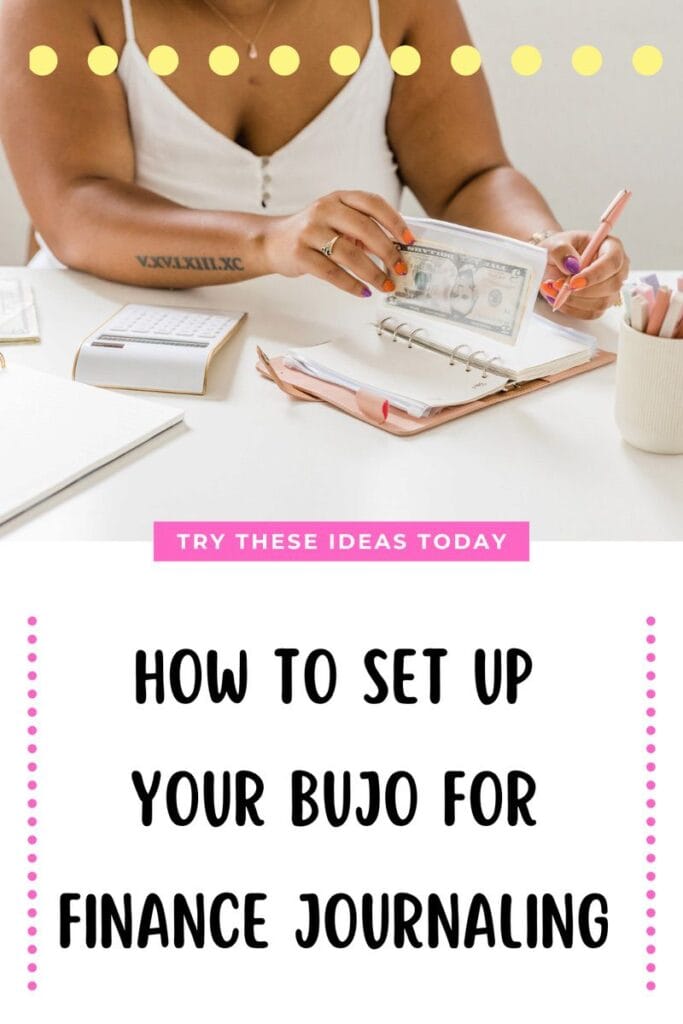
The Essential Long-Term Financial Spreads
Before getting into the minute details of what you spend and why, the first spreads you’ll need focus on the bigger picture. These long-term financial logs act as your financial north star for the entire year.
I usually set these up at the front of my journal/pocket notebook so I can refer back to them when I need to check my progress or need a burst of motivation.
1. The Big-Picture Finance Dashboard
This spread gives you a bird’s-eye view of your starting point and your financial goals for the year. It also indexes all the other pages you need to reference.
One thing I also like to add is a ‘note to self’, a little motivation for what I’m saving for or a message that lets me know that trying is enough (because, hey, life is going to happen and sometimes that means focusing on something else over a particular savings goal).
If you want to, you could pair this with a vision board, if that might help motivate you. In this instance, you might end up with a “current” dashboard and a “future/desired” spread.
2. The Yearly/Monthly Subscriptions Tracker
We all have a subscription to something: TV, phone, healthcare, but how many of us know when recurring charges kick in? Take a page to create a tracker to help you see where you spend money on subscriptions.
Draw a simple column layout tracking the Name, Cost, Billing Frequency, and Renewal Date.
Checking this list before the start of a new month helps you know what cash you have to spend or save, and it also highlights subscriptions you might be able to downgrade or close out. It will also help remind you of things you only meant to sign up for for a short time but are still paying for.
This helps you stay mindful of where your money is going. I’ve saved so much by writing down everything I’ve signed up for.
3. The Debt Payoff Progress Map
Credit card debt is one of the most common debts, and paying off the minimum each month won’t change the world for us, especially if we are trying to free up cash for something else. That debt can also leave us feeling stressed.
A dedicated debt payoff progress map (or tracker) uses visual cues to help us celebrate small wins on our journey to reducing debt, and it works well if you add saving pointers/motivation in the sidebar.
Many popular bullet journal budget layout ideas use a “thermometer” style drawing or a grid of blocks where each square represents a specific currency amount (e.g., £50 or £100). Every time you make a payment, you get the immense satisfaction of colouring in those blocks. Watching the colour climb and seeing the debt physically shrink on the page is quite therapeutic. You can use that same idea for savings goals if you have one in mind.

The Monthly Finance Journaling Spreads
Once your year-long spreads are locked in, it is time to build the pages you will interact with every single week. Here are three spreads I think are really helpful:
1. The Monthly Budget Layout
At the start of every month, sit down with your journal to map out a monthly budget spread. Divide this page into three simple areas: your income, your fixed expenses (rent, utilities, loans), and your variable expenses (groceries, going out money, savings). By writing these numbers down by hand, you are actively deciding how your money will serve you over the next 30 days.
It might feel restrictive at first, and probably quite tight, but don’t worry; that’s a good thing. It makes you think about where you can save money and keep more cash in your pocket.
A good place to start for that is cross-referencing your budget with your debt progress map and your subscriptions tracker. What can you work off to help?
Over time, it’ll become easier and more ‘freeing’ to work on your budget month to month.
2. The Daily or Weekly Expense Tracker
Your bujo daily expense tracker is really a daily awareness check-in. It provides visibility, helping you keep an eye on your finances as they change.
Dedicate an area on your daily pages to log expenses in real time. Keep the columns simple: Date, Description, Category, and Amount.
If you prefer a faster approach, you can create a minimalist bujo finance spread for the week rather than daily. For me, I find weekly is plenty because daily feels like too much.
When you write down every purchase, you close the loop on mindless card tapping and start to see how you really use the cash in your pocket.
If you are worried about keeping your financial details private, try using codes or initials instead of exact shop names or categories, or keep your journal in a safe place at home. That way, all your info stays personal, and you can relax while tracking your spending.

3. Saving Trackers
Saving money becomes a lot more addictive when you can see your progress growing visually, so for this section of your monthly setup, you’ll want to track short-term milestones, like a holiday fund or Christmas gifts in a table.
Some of the most popular bullet journal savings tracker ideas have fun, interactive elements: drawing a jar and filling it with coins, or sketching a grid where every shaded square brings you closer to that weekend getaway.
Here are some fun ideas for saving challenges if you need them: How to Save Money this Year Using These 5 Bujo Finance Tricks
And don’t worry if all you save this week is 50p or £1. Every penny saved is money toward something you want or need.
Have you heard of money binders? Want to know how to incorporate them into your bujo setup? Here’s how: Mindful Budget Binder Setup Ideas for Your Journal
The End-of-Month Finance Journaling Review
Setting up your bigger picture and tracking pages is only half the battle; the real transformation starts when you close the loop at the end of the 30 days. The end-of-month review turns your journal entries into genuine insight.
When the month wraps up, sit down with your journal. Did you overspend on dining out? Did you hit your targets on your saving trackers? Ask yourself a few mindful questions:
- What triggered my impulse buys this month?
- Did my spending actually bring me joy, or was I just stressed?
Bringing this level of awareness to your money journal gives you the clarity you need to make adjustments for next month.
There’s no specific layout here; instead, you can use these pages as standard journal entries. If you want something visual, add a ‘wins’ box where you bullet-point everything you managed to achieve.
A word of advice: keep your review entry positive. Even if you didn’t reach a goal, celebrate what you did manage; a full month of understanding through diligently completing your trackers is just as powerful as saving a cash amount.
Design Inspiration: Layout Ideas & Style Choices
The beauty of a bullet journal is that it adapts entirely to you. If you love artistic doodles and vibrant colour coding, go for it. If the thought of drawing straight lines makes you sweat, keep it basic. Your finance journal needs to look like your brain and work for your brain.
Here are a few thoughts on design and style choices.
The Minimalist Bujo Finance Spread
If you want efficiency and zero clutter, the minimalist style is your best bet. A great minimalist layout relies on functional typography, like bold header text or using highlighters to categorise things, and it should take less than five minutes to set up and no longer than five minutes to fill in.
Visual & Creative Spreads
For the visual thinkers, adding a bit of creative flair can completely change your emotional relationship with financial journaling. You can even gamify the process by adding interactive elements to your pages.
If you’re feeling stuck on how to design your pages, take a look at my Pinterest account (and follow me over there too!).
One word of advice: keep each spread’s focus on task. You don’t want to lose sight of your goals by overly complicated or time-consuming, but beautiful journal decorations.
Customising in a Way that Makes Sense
Can you customise your layouts to include other types of finance trackers or records? Absolutely! How you lay out your financial journal ultimately depends on the daily habit you are building. Your layouts should never feel overwhelming or counterintuitive. Instead, they should support a positive money-tracking experience. So, experiment.
Try lots of different approaches and see what sticks. Create a system you enjoy filling in, while giving you clarity on your numbers and movement toward a healthier balance between income and expenses.
And don’t forget it’s a space to dream and process. Getting a handle on your cash flow is just one part. You should also be able to dream about what you’d like to achieve and process how you feel about what you’d like to change. So, make room for that, whether that’s some space in a monthly review or creating a separate dedicated spread each month.
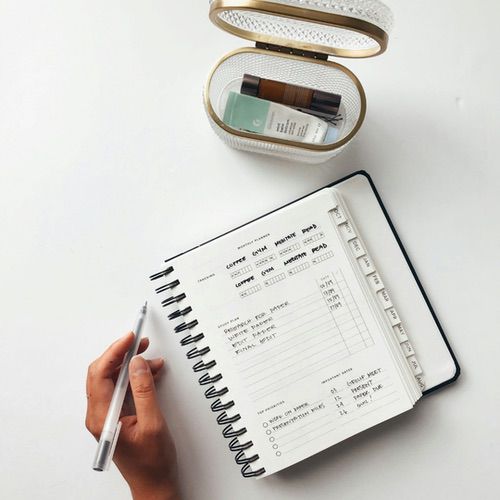
Shortcuts: Journal Printables
Okay, not every one of us is a Picasso or has the time to hand-draw every bujo setup. If that’s you, as I said, minimalist designs will work best. But you can also go another route: the printable. Printables are a low-cost way to build a journal system you can easily fill in when you are short on time.
My store has some coming soon!
Taking Control of Your Money with Finance Journaling
Writing your money down by hand gives you something a banking app doesn’t: a record of what you spent alongside how you felt when you spent it. That’s what makes bullet journal finance worth a few minutes a day. Within a month or two, patterns show up (the Friday takeaway after a long week, the subscription you forgot about), and once you can see them, you can decide what to do about them.
If you only do one thing this week, set up the subscriptions tracker. It takes a single page and about ten minutes, and it’s the quickest way to find money you’re already spending without noticing. Add the daily expense tracker once that feels easy, and leave the rest until you’re ready for it.
Curious how money journaling changes the way you think about spending, beyond how you track it? Read From Anxiety to Abundance: How Money Journaling Changes Your Mindset.
Now, I want to hear from you: Which spread are you going to build first? Are you going to start tracking your debt-payoff journey, or dive straight into a monthly budget spread? Let me know in the comments below.
Disclosure: If you purchase anything from links in this post or any other, I may receive some kind of affiliate commission. However, I only ever mention products I love and would recommend regardless of commission.
Disclosure: I’m not a mental-health or medical expert, I just share what I’ve learned through my own research and experience. The ideas and prompts here are meant to help you reflect and grow, but they’re not a replacement for professional advice. You can read my full disclaimers here.