
Journaling has been helping people express their thoughts and emotions for centuries. It’s an incredible way to reflect on life experiences, process complex emotions, and become more organised and mindful. For high schoolers, journaling can offer a valuable way of processing emotions and a form of self-expression. Writing can help them develop meaningful solutions to their problems and stay focused on their goals. Let’s look at some excellent journal prompts for high school students.

Disclosure: If you purchase anything from links in this post or any other, I may receive some kind of affiliate commission. However, I only ever mention products I love and would recommend regardless of commission.
Disclosure: I’m not a mental-health or medical expert, I just share what I’ve learned through my own research and experience. The ideas and prompts here are meant to help you reflect and grow, but they’re not a replacement for professional advice. You can read my full disclaimers here.
To make the most out of journaling, using a writing prompt can be helpful for providing structure and guidance for teens to write about. They can help them focus their thoughts and give them ideas of topics to write about.
In this blog post, we will discuss the importance of journaling and its benefits for high school students. We will also list 50 high school writing prompts teens can use to express themselves. Finally, we will share some journal topics for high school students and talk about the motivation to journal in high school.
Benefits of Journaling for High School Students
As a high school student, journaling in daily life can be a great tool to help navigate life’s biggest challenges, explore new ideas, and make sense of emotions (even difficult emotions). It’s also a fantastic resource for personal growth, as it allows you to gain self-awareness by exploring your thoughts and feelings from a different perspective.
Journal writing can improve organisational skills by helping track homework assignments, take notes in class, and create daily to-do lists.
Writing out ideas and organising them on paper helps clarify them and makes them easier to remember. Since journaling is a form of self-expression, it can also document important milestones or events from the past.
When it comes to thinking creatively, journaling is an useful resource. Writing out your thoughts helps make sense of them, which can lead to fresh ideas. You can explore these ideas further by writing them down and coming up with solutions to problems you may be facing.
Not only does this help you better understand yourself, but it also encourages you to think outside the box and use mindfulness to come up with creative solutions to difficult situations.
Another great benefit of journaling for high school students is improved problem-solving skills. Writing out your thoughts can help you prioritise and identify the issues that need to be addressed.

Finally, journaling can be a fantastic source of stress relief for high school students. Writing down your thoughts and feelings can help relieve tension and manage anxiety or depression.
It can also be used to reflect on positive experiences, providing a sense of joy and satisfaction. By writing out their thoughts and feelings, your high schooler can better understand what’s causing them and develop coping strategies.
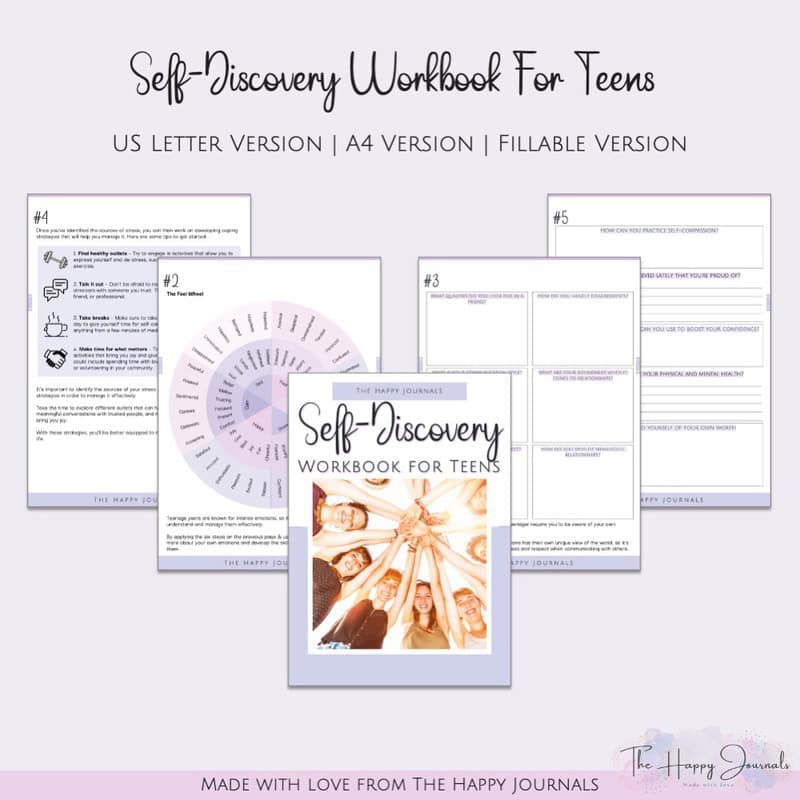
Grab the Self-Discovery Workbook For Teens
This workbook has been designed to guide your teens through a process of self-discovery and to help them gain an understanding of themselves.
In this workbook, we will explore topics including: Setting boundaries, your emotions, positive relationships, identifying stressors, knowing your worth, exploring strengths and weaknesses, and success goals.
50 Journal Prompts for High School Students
As we’ve already explored, journaling is an exceptional way for high school students to delve into their thoughts and emotions, strengthen self-expression, and hone their creative problem-solving abilities.
Additionally, it can be used to refine organisation skills, heighten self-awareness, and lower stress and anxiety.
To maximise the benefits of journaling, it’s always useful to have an assortment of journal topics that can stimulate fresh ideas and guide the writing process. Having fun writing prompts are important, too. There’s nothing wrong with a bit of silliness.

Below are 50 creative journal prompts tailored to help high school students achieve the goal of enhancing their creativity and sharpening their critical thinking skills.
- What is your biggest fear and why?
- Describe a time when you had to make a difficult decision.
- If you could travel anywhere in the world, where would you go and why?
- What is your favourite book and why?
- Write about a person who has influenced your life and how they did it.
- What are your goals for the future, and how do you plan to achieve them?
- Describe a moment that changed your perspective on something.
- What is your favourite hobby, and why?
- Write about a challenge you have overcome and what you learned from it.
- If you could have any superpower, what would it be and why?
- What is your favourite memory from childhood and why?
- Describe a place that makes you feel calm and relaxed.
- Write about a time when you felt proud of yourself.
- If you could have dinner with anyone, living or dead, who would it be and why?
- What is your favourite song, and why?
- Write about a time when you had to stand up for what you believe in.
- If you could change one thing about the world, what would it be and why?
- Describe a time when you felt like giving up but didn’t.
- What is your favourite movie, and why?
- Write about a person who inspires you and why.
- If you could relive any moment in your life, what would it be and why?
- What is your favourite quote and why?
- Describe a time when you had to apologise to someone.
- Write about a time when you felt like you didn’t fit in.
- If you could switch lives with anyone for a day, who would it be and why?
- What is your favourite food and why?
- Write about a time when you had to forgive someone.
- If you could have any job in the world, what would it be and why?
- Describe a time when you felt like you were on top of the world.
- What is your favourite TV show, and why?
- Write about a time when you had to work hard for something.
- If you could go back in time and witness any event, what would it be and why?
- What is your favourite animal, and why?
- Describe a time when you had to make a sacrifice.
- Write about a time when you felt like you were in over your head.
- If you could have any pet, what would it be and why?
- What is your favourite colour and why?
- Write about a time when you had to take a risk.
- If you could have any talent, what would it be and why?
- Describe a time when you had to deal with a difficult person.
- What is your favourite season and why?
- Write about a time when you had to learn something the hard way.
- If you could have a car, what would it be and why?
- What is your favourite holiday and why?
- Describe a time when you had to overcome a fear.
- Write about a time when you had to make a compromise.
- If you could have any house, what would it look like and why?
- What is your favourite type of weather and why?
- Write about a time when you had to persevere through a tough situation.
- If you could have any type of technology, what would it be and why?

journal topics for high school students
Sometimes, high school students might not like using super specific journal prompts, but they would like guidance and ideas to use as a starting point. So, I’ve put together a list of journal topics to get the ideas flowing. Here are some suggestions:
- My Goals for This Year – Write about what you hope to achieve academically, personally, and socially this year.
- Memorable Days – Describe a day that was particularly memorable for you. What made it special?
- Inspiration – Who or what inspires you? Write about how they influence your life.
- Favourite Books/Movies – Discuss your top three books or movies and why they resonate with you.
- What I’m Grateful For – List things you are thankful for.
- Challenges I’ve Overcome – Reflect on a challenge you’ve faced and how you overcame it.
- Friendship – Write about your best friends. What makes them special?
- Dreams and Aspirations – Describe your dreams for the future and the steps you need to take to achieve them.
- My Favourite Memory – Describe a happy or funny moment in detail.
- Lessons Learned – Share an important lesson you’ve learned recently and how it impacted you.
Again, there are no rules here. You can choose any of these topics or combine them to create your unique journaling experience. If these topics are interesting starting points for your high schoolers, they could be used to develop their own daily writing prompts for high school.
Grab the Self-Discovery Workbook For Teens
This workbook has been designed to guide your teens through a process of self-discovery and to help them gain an understanding of themselves.
In this workbook, we will explore topics including: Setting boundaries, your emotions, positive relationships, identifying stressors, knowing your worth, exploring strengths and weaknesses, and success goals.
Motivation to Journal in High School
By writing in detail about their lives, students can gain a greater sense of understanding and connection with themselves. This self-awareness is important for personal growth. Especially when it comes to navigating the ups and downs of high school.
Journaling also helps students better understand their aspirations and objectives. It’s an excellent way to explore interesting ideas, reflect on progress, and track successes. Writing down dreams and goals can help students stay motivated and focused.
Journaling is a great tool for high school students to express themselves and better understand their thoughts, feelings, and goals. Through writing, students can develop self-awareness, creativity, and problem-solving skills. It can empower students to navigate the highs and lows of high school and become their best version.
But it doesn’t have to be boring. Maybe they might like to use some Halloween journal prompts. Or maybe they’d like to pick and choose from other journal prompt lists.

The Bottom Line
Journaling is an excellent way for high school students to express themselves, explore their emotions and aspirations, and build self-care habits. Writing helps develop problem-solving abilities and gain self-awareness. Journal prompts encourage creative expression and break the monotony of daily routines.
To develop a journaling habit, set realistic goals such as committing to writing at least once daily and designating a specific time for it. Tons of online resources are available to help, including online sources of journal prompts and support organisations.
Disclosure: If you purchase anything from links in this post or any other, I may receive some kind of affiliate commission. However, I only ever mention products I love and would recommend regardless of commission.
Disclosure: I’m not a mental-health or medical expert, I just share what I’ve learned through my own research and experience. The ideas and prompts here are meant to help you reflect and grow, but they’re not a replacement for professional advice. You can read my full disclaimers here.