
If you’re wondering what journaling is, it’s pretty straightforward. Journaling is regularly writing down your thoughts, feelings, and experiences. Think of it as a diary where you can spill your heart out, brainstorm ideas, or jot down what happened during your day. Today, I want to look at journaling for high school students and why it is so beneficial.

Disclosure: If you purchase anything from links in this post or any other, I may receive some kind of affiliate commission. However, I only ever mention products I love and would recommend regardless of commission.
Disclosure: I’m not a mental-health or medical expert, I just share what I’ve learned through my own research and experience. The ideas and prompts here are meant to help you reflect and grow, but they’re not a replacement for professional advice. You can read my full disclaimers here.
Journaling is especially relevant for high school students because it provides a safe space to express yourself without judgment. Whether you’re dealing with the stress of homework, navigating friendships, or just trying to figure out who you are, journaling can make you feel better.
This blog post will explore the benefits of journaling for high school students and give you some practical tips on how to get started. By the end of this post, you’ll be itching to pick up a pen (or open a journaling app) and start writing.
So, let’s get into the details of how journaling can benefit you and how you can start your own journal practice.
Benefits of Journaling for High School Students
Why exactly is keeping a journal for teens so beneficial? Here are a few key benefits that might convince you to start your own journal:
- Emotional Expression: Journaling is a safe space to articulate your feelings. Whether you’re ecstatic about a good grade or frustrated with a friend, putting your emotions on paper can be incredibly freeing. It helps you process what you’re experiencing, making it easier to manage your emotions.
- Great For Stress Relief: High school can be stressful (I remember it well). Journaling is proven to reduce anxiety and stress. By writing down your worries, you can clarify your problems and find ways to tackle them.
- Improved Focus and Organisation: If you struggle with staying organised or managing your time, journaling can help. Journaling can serve as a planner where you jot down your tasks, goals, and deadlines. This practice can enhance your focus, making it easier to stay on top of your school responsibilities.
- Increase Creativity: Journaling can be a great creative outlet. Writing regularly can spark new ideas and encourage you to think outside the box. You might even discover a hidden talent for storytelling or poetry.
- Better Self-Discovery: One of the most rewarding aspects of journaling is self-discovery. By taking time to reflect on your thoughts and feelings, you increase your self-awareness and understanding of who you are. This can lead to personal growth and a stronger sense of identity.
So, if you’re feeling overwhelmed, confused, or curious about yourself, try journaling.

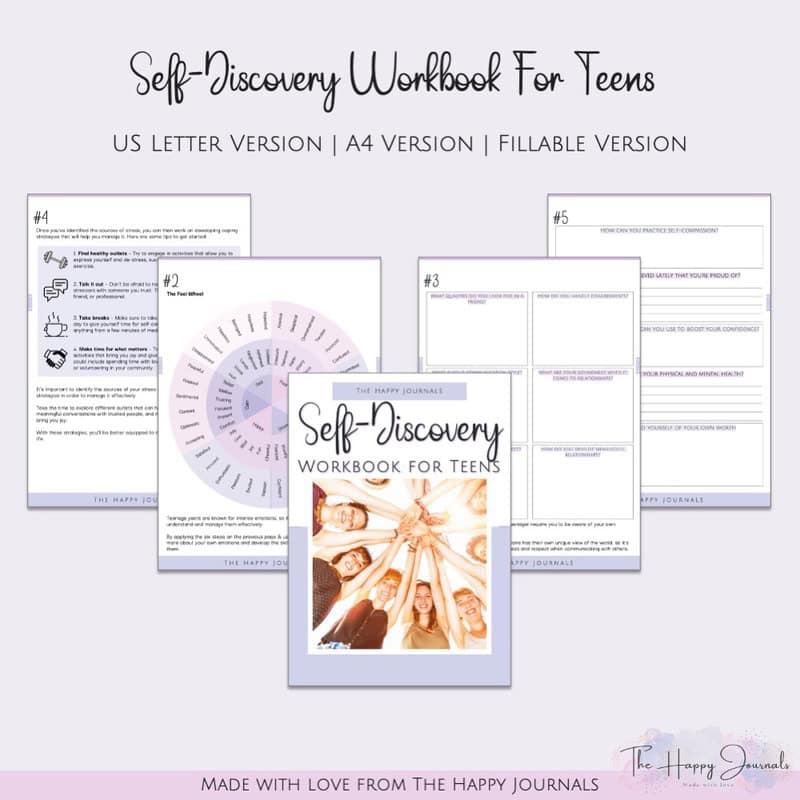
Grab the Self-Discovery Workbook For Teens
This workbook has been designed to guide your teens through a process of self-discovery and to help them gain an understanding of themselves.
In this workbook, we will explore topics including: Setting boundaries, your emotions, positive relationships, identifying stressors, knowing your worth, exploring strengths and weaknesses, and success goals.
Tips for Starting A journal For Teens
Okay, you’re convinced journaling could be beneficial, but where do you start? Don’t worry; here are a few practical tips to help you kick off your journaling journey:
- Choose the Right Medium: First, decide whether to use a paper journal or an app. Some people love the tactile feel of writing by hand, while others prefer typing. Plenty of great journaling apps, like Day One and Journey, can make the process super convenient.
- Set a Journaling Routine: One of the best ways to make journaling a habit is to establish a routine. Consistency is key, whether it’s a few minutes every morning or a weekly reflection session. You could even set a reminder on your phone to help you stick to it. You might be interested in this post: Creating A Journaling Schedule.
- Start Simple: There is no need to write a novel on your first try. Start with short entries or prompts. For example, jot down three things you’re grateful for or describe one thing that happened during your day. Keep it manageable so you don’t get overwhelmed.
- Experiment with Different Styles: There are various journaling styles to explore. You might enjoy bullet journaling for its organised format or a gratitude journal to focus on the positive aspects of life. Reflective journaling is great for deeper self-exploration. Don’t be afraid to mix it up and find what works best for you.
- Always Be Honest: This is your space, so always be authentic. Write without fear of judgment. Your journal is a safe place to express your true thoughts and feelings. Remember, there’s no right or wrong way to journal.
If you still need to figure out how to begin, check out some journal prompts for inspiration. Sometimes, a little nudge is all you need to get those words flowing. Try this post as a starting point: 50 Journal Prompts For High School Students.

Journaling Techniques To Try
Now that you’re ready to try journaling, let’s talk about some techniques and prompts to keep you inspired and motivated. Trust me, there are plenty of ways to make journaling fun and beneficial. Here are a few to get you started:
Free Writing
Free writing is exactly what it sounds like: writing freely! The idea is to set a timer (say, for 15 minutes) and write or doodle whatever comes to mind. Don’t worry about grammar, punctuation, or making sense. It helps you get your thoughts out and can be incredibly liberating. You might be surprised at what surfaces when you let your mind roam.
Here’s a quick tip: If you get stuck, write “I don’t know what to write” until something else comes to mind. The key is to keep writing.
Prompt-Based Journaling
Sometimes, a little guidance can help. Prompt-based journaling involves responding to questions or statements. This technique is great for getting the creative juices flowing and can help you explore different areas of your life.
Here are a couple of journal prompts to get you started:
- Write about a time you overcame a challenge. How did it shape you?
- If you could change one thing about yourself, what would it be? Why?
- Describe your perfect day. What would you do and who would you spend it with?
- What are three things you’re grateful for today? Reflect on why they matter.

A Gratitude Journal For Teens
A Gratitude journal helps you focus on your life’s positive elements. Regularly writing down things you’re thankful for can positively impact your mood and view of life. Plus, it’s a great way to practice mindfulness and stay grounded.
How to get started with a gratitude journal:
- Each day, write down five things you’re grateful for. They can be big or small, like “I’m grateful for my supportive friend” or “I’m grateful for the sunny weather.”
- Be specific. Instead of saying, “I’m grateful for my family,” try “I’m grateful for my mom’s encouragement during my exams.”
You might like this post for more on gratitude journaling: How to Start a Gratitude Journal for Teens (with Simple Prompts)
Reflective Journaling
Reflective journaling is all about exploring your experiences and learning from them. It’s a great way to learn more about your life and identify lessons. This technique can help you grow both personally and at school.
How to do reflective journaling:
- Think about a recent experience or event. Write down what happened, how it made you feel, and what you learned.
- Ask yourself: “What did I do well?” and “What could I have done differently?”
- Use reflective journaling to set goals and plan your next steps.
Remember, there’s no right or wrong way to journal for teens (or anyone for that matter). Finding a technique that resonates with you and makes you feel good is important.
A Few Books on Journaling
- The Artist’s Way by Julia Cameron: This classic book is great for sparking creativity. It offers a 12-week program that includes daily journaling exercises, perfect if you’re looking to maximise your creative side.
- The New Diary by Tristine Rainer: This book is a comprehensive guide to journaling, offering various techniques and prompts. It’s excellent for both beginners and seasoned journalers.
- The Bullet Journal Method by Ryder Carroll: If you’re into organisation and structure, this book is for you. It teaches the bullet journaling technique, perfect for students looking to better manage their time and tasks.

Journaling Apps To Try
Loads of apps can help you stay consistent and organised if you prefer to journal digitally. Here are a few popular ones:
- Day One: This app is highly rated for its user-friendly interface and features such as photo attachments and location tagging. It is great for capturing daily moments and reflections.
- Journey: Journey offers a clean and simple interface, making it easy to focus on writing. It is also supported on multiple platforms, so you can journal on your phone, tablet, or computer.
- Moodnotes: This app helps you track your moods and thoughts. It’s a great tool for those looking to improve their mental health through journaling.
These resources allow you to explore and enhance your journaling practice.
Wrapping Up
Journaling is a great tool for high school students and can make a real difference in their lives. From emotional expression to stress relief and from improved focus to enhanced creativity. Here’s a quick recap of what we’ve covered:
- Emotional Expression: Journaling helps you articulate your feelings, making them easier to understand and manage. This can be especially helpful during those rollercoaster years of high school.
- A Stress Relief Tool: Writing your thoughts down can significantly reduce anxiety and stress.
- Improved Focus and Organisation: Journaling can help you keep track of your academic tasks and manage your time better. You can jot down your goals and deadlines and even create to-do lists.
- Increased Creativity: Regular journaling can stimulate your creative thinking and help you generate new ideas.
- Self-Discovery: A journal for teens is a great way to explore your thoughts and feelings, which leads to greater self-awareness and personal growth. You might discover things about yourself that you never considered.
It is important to remember that journaling isn’t just about writing; it’s about reflection and growth. It can help you navigate the ups and downs of high school life.
Grab the Self-Discovery Workbook For Teens
This workbook has been designed to guide your teens through a process of self-discovery and to help them gain an understanding of themselves.
In this workbook, we will explore topics including: Setting boundaries, your emotions, positive relationships, identifying stressors, knowing your worth, exploring strengths and weaknesses, and success goals.
Disclosure: If you purchase anything from links in this post or any other, I may receive some kind of affiliate commission. However, I only ever mention products I love and would recommend regardless of commission.
Disclosure: I’m not a mental-health or medical expert, I just share what I’ve learned through my own research and experience. The ideas and prompts here are meant to help you reflect and grow, but they’re not a replacement for professional advice. You can read my full disclaimers here.