Some people write full journal entries every morning. Others stick to bullet points, quotes, or a moody one-word summary of how the day went. But if you’ve ever opened your planner and thought, “Can I just do it here?” — the answer is yes. Yes, you can.

Disclosure: If you purchase anything from links in this post or any other, I may receive some kind of affiliate commission. However, I only ever mention products I love and would recommend regardless of commission.
Disclosure: I’m not a mental-health or medical expert, I just share what I’ve learned through my own research and experience. The ideas and prompts here are meant to help you reflect and grow, but they’re not a replacement for professional advice. You can read my full disclaimers here.
Using a planner daily can absolutely count as journaling. Especially if you’re short on time or not quite sure what to write. It’s a great way to build a relaxed writing habit without adding another notebook to your life (or another task to your to-do list).
In this post, we’ll go through four simple ways to turn your planner into a journaling space that actually fits into your day. No pressure, no prompts, no performance. Just quick moments that make using a planner daily feel like something you actually want to do.
Start with a Tiny Intention
Before the day gets going, try writing one quick line at the top of your planner page. Something to keep in mind as you move through whatever’s coming.
It doesn’t have to be insightful or poetic. Just a small note about the kind of day you want to have. Even something simple like:
- Keep things in perspective.
- Don’t rush lunch.
- One thing at a time.
This single word or sentence gives your day a bit of direction. Not in a productivity sense, but in a personal sense. It’s less about what needs doing and more about how you want to feel doing it.
You can add it in a corner, create a small box for it, or just highlight it quickly so it stands out. (A layout like this one might make it easier to build the habit.)
Add a Wins Box (Yes, Even Small Ones Count)
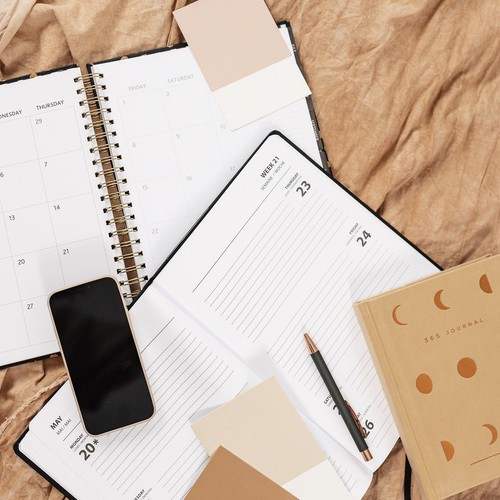
Often, using a planner daily makes you focus on what you didn’t do… all the unchecked boxes, the things that rolled over, the notes you ignored. So why not flip the script?
Add a small section to the end of each day and call it something like:
- Small Wins
- Glad I Did This
- Stuff That Worked Today
Then, actually use it.
You don’t need epic accomplishments. Just little things that made the day feel less like a blur: answered an email you’d been avoiding, remembered to water your plants, got through a meeting without screaming internally. That sort of thing.
It’s a simple way to feel like the day happened, not just passed.
And if it helps you spot patterns, moods, or streaks, you can always colour-code those wins. Discover the benefits of colour coding a planner or journal here.
Track a Feeling, Not Just a Habit
Not every planner has room for a full mood tracker. But you don’t need a whole spread to notice how you’re feeling. Just build it into the day.
A few easy ways to do it:
- Add a tiny weather-style icon (sunny, stormy, foggy — you get it)
- Use a colour to mark how your energy felt overall (stickers or highlighters like these work well)
- Pick one word before bed that sums up your general vibe
It sounds small, but these quick check-ins can tell you a lot. Especially when you start spotting patterns. You might realise certain tasks always drain you, or that your best days don’t necessarily have the most ticks.
Journaling doesn’t have to mean deep reflection every time. Sometimes it’s just noticing enough to plan a little better next time.
Using A Planner Daily to Catch One Thought
You don’t always need a prompt. Sometimes you just need somewhere to drop a thought before the day ends.
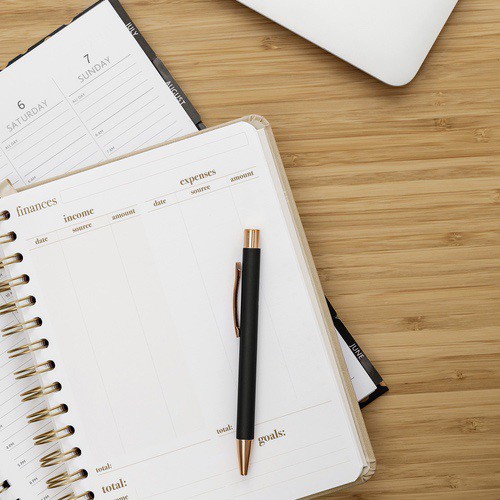
Create a small section in your planner: a corner, a margin, a sticky note. Then label it something easy:
- One Thought
- What’s On My Mind
- Random but Worth Writing Down
Then use it for whatever’s sitting in your head: moments that surprised you, conversations to remember, observations, complaints, good lines from a podcast… Anything.
It doesn’t need to go anywhere. It doesn’t have to be wise. It just gets it out of your brain and onto the page. And hey presto, that’s journaling.
You might find it helps to keep a pen you actually like using (this one is a solid pick) clipped to your planner so it’s ready when something hits you.
And if you want a planner that already includes space for reflections, try something journal-style like a Clever Fox planner.
Wrapping Up
There’s something oddly satisfying about using a planner daily in a way that feels genuinely useful. Your planner might not look like a journal, but once you start slipping in thoughts, observations, and quick reflections, it becomes one.
And the best part? You don’t have to start a whole new habit. You’re not adding another thing to your plate — you’re just making better use of a space that’s already part of your day.
If any of the ideas in this post made you pause or think, “Yeah, I could do that,” then try it tomorrow. Write something small. Circle something that felt good. Use your planner as a place to notice, not just to plan.
If you’re already doing something similar, I’d love to hear about it — drop a comment or send this post to someone who’s still trying to figure out what journaling looks like for them.
Need help finding a format that fits? Click here for six types of planners you might like. Or try a notebook like this and mix things up until it feels good.
If you’re short on space, a small desktop stand like this one can keep your planner open and ready.
Disclosure: If you purchase anything from links in this post or any other, I may receive some kind of affiliate commission. However, I only ever mention products I love and would recommend regardless of commission.
Disclosure: I’m not a mental-health or medical expert, I just share what I’ve learned through my own research and experience. The ideas and prompts here are meant to help you reflect and grow, but they’re not a replacement for professional advice. You can read my full disclaimers here.