Winter has a way of flipping the daily routine — suddenly everything’s slower, darker, and a bit more indoorsy. For kids, that can mean bursts of creativity or long stretches of boredom (sometimes both, within five minutes). A winter journal for kids is one of those sneaky little things that feels like fun to them but gives you a breather — a mix of doodling, scribbling, imagining, and reflecting that doesn’t need much set-up or supervision.

Disclosure: If you purchase anything from links in this post or any other, I may receive some kind of affiliate commission. However, I only ever mention products I love and would recommend regardless of commission.
Disclosure: I’m not a mental-health or medical expert, I just share what I’ve learned through my own research and experience. The ideas and prompts here are meant to help you reflect and grow, but they’re not a replacement for professional advice. You can read my full disclaimers here.
If you’re trying to get through the darker months with your sanity intact, a winter journal for kids can be a secret weapon. It gives kids a creative outlet that doesn’t rely on screens or schedules — and gives you a few peaceful minutes without the chaos. No need for fancy supplies or structured activities. If they want to write a story about a grumpy snowman or fill a page with penguins wearing hats, that’s a win.
This post is packed with winter journal for kids ideas and creative extras to help kids create a journal that actually feels like their own. There is no pressure to be neat, so I can’t promise that you won’t experience the odd glitter explosion.
Why Journaling Works So Well for Kids in Winter
Cold weather means more time indoors — and that can either lead to cabin fever or a surprising boost in creativity. A winter journal for kids provides a way for them to make sense of what’s happening around them: the frost on the windows, the early darkness, and the peculiar week between Christmas and New Year’s when no one knows what day it is.
Journaling can be a place for:
- Writing silly stories about snowmen who come to life
- Drawing what they think hibernating animals dream about
- Making lists of their favourite winter snacks or snowy day activities
It’s not about getting spelling right or following a structure — it’s just about having somewhere to put all their ideas, observations, and random thoughts. Even a lined notebook or a stack of printer paper can work.
Easy Winter Journal Prompts Kids Will Actually Use
The best prompts are the ones that make kids laugh, think, or start talking out loud before they’ve even picked up a pencil. A good winter journal for kids should feel more like play than homework — and these ideas are designed to do just that.
Here are some fun prompts to try:
- Design your dream hot chocolate. What’s in it? What’s on top? What’s it served in?
- Invent a new winter animal. What’s it called? Where does it live? What does it eat?
- What if snow could talk? Write a short story or comic strip.
- Draw your perfect snow day. Include what you’d wear, what you’d do, and who you’d hang out with.
- Winter gratitude list. What do you actually like about winter? (Even just staying in pyjamas counts.)
- Make up a festive character. Think: “The Ice Cream Elf” or “Captain Cosy Socks.” What’s their story?
- If I were a snowflake… Finish the sentence. Keep going.
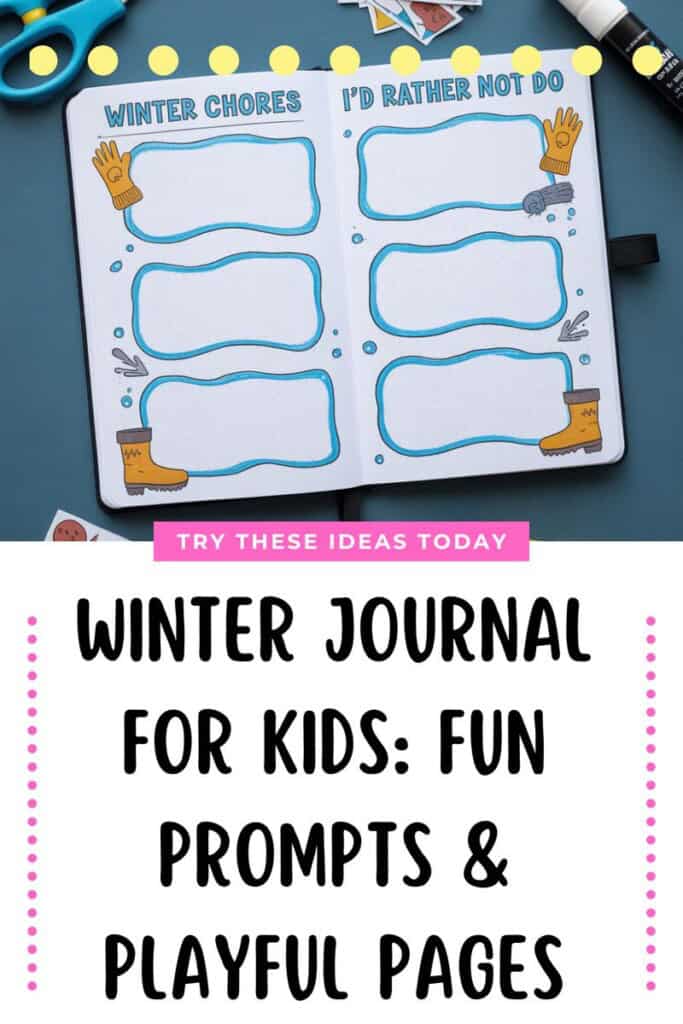
- Top 5 worst winter chores. And how you’d make them more fun.
You can pick one of these at random each day, turn them into a little challenge, or let your child flip through and choose whatever catches their eye.
Want even more inspiration? Try the 7-Day Winter Journal Challenge for a week of prompts you can do together — or adapt them to suit your kids’ age and style.
Fun Page Layouts to Make Journaling More Engaging
Not every kid loves a blank page. Some need a bit of structure or visual inspiration to get started — and that’s where fun layouts come in. In a winter journal for kids, spreads can be playful, colourful, and as silly or serious as your child wants them to be.
Here are a few layout ideas to try:
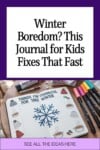
- Gratitude snowflakes: Draw a big snowflake with lines or shapes branching out — write or draw one thing your child’s grateful for in each section.
- Mittens Mood Tracker: Sketch a pair of mittens for each day of the week and colour them in based on your mood.
- Winter memory collage: Cut and paste magazine clippings, stickers, or drawings that remind them of winter.
- Winter bucket list: Let them list or draw things they want to do before spring rolls around — build a snowman, drink mulled juice, spot a robin, etc.
- Cosy day log: One page to document the ultimate lazy winter day — what they wore, what they did, what snacks were involved.
You don’t need anything fancy — just some coloured pens or pencils and maybe a few winter-themed stickers. If you’re looking to make things even more exciting, these fun journaling sticker packs for kids on Amazon are a brilliant addition.
Creative Add-Ons That Make It Feel Like Play
Sometimes it’s not the journal itself that gets kids interested — it’s the fun of decorating it. Turning journaling into a bit of a craft project can make it feel more like a game and less like a task.
Here are some creative extras to keep things playful:
- Stickers and washi tape: Let kids customise their pages with themed stickers, patterned tape, or alphabet sets.
- Magazine clippings and glue: Create collage-style pages using old magazines, wrapping paper, or even junk mail.
- Simple stamps and stencils: Add shapes, textures, or borders with kid-friendly tools.
- Scrap paper and card cutouts: Scrapbooking paper is deal for creating frames, borders, or adding layering effects.
- Mini envelopes or pockets: Mini envelopes are great for tucking in a secret message or mini drawing.
Most of these items can be found in your kitchen drawer or craft box — but if you’re looking for something seasonal and fun, these winter-themed craft kits for kids are a lovely addition.
Want more creative ideas? The Winter Art Journaling Ideas post offers even more inspiration for messy, expressive fun, that can be adapted to suit any age.

Helping Kids Stick With It (Without Pushing It)
Some kids will journal every day if given the chance. Others? Not so much. And that’s completely fine. The key to keeping a winter journal for kids going is to make it feel optional and fun.
A few ways to keep the momentum without turning it into a battle:
- Let them choose when and how often to journal
- Join in with your own journal — or use a shared one
- Leave their journal out where they can see it
- Offer prompts or stickers as a surprise, not a task
- Remind yourself: it’s about expression, not results
You could even work together on a simple winter spread using one of the ideas from the Winter Journal Spread Ideas post — sometimes it just takes a spark to get things rolling.
Wrapping Up
A winter journal for kids doesn’t have to be anything fancy. At its core, it’s simply a space for them to play, express themselves, and enjoy some creative freedom during the coldest, slowest months of the year.
Whether they’re scribbling down their dream snow day or sticking penguin stickers in a notebook, it all counts. It might look messy, brilliant, and completely bonkers — but if it feels like it belongs to them, you’re doing it right.
Got a favourite prompt or page idea from this post? Or a kid who’s tried journaling this winter? I’d love to hear how it’s going — feel free to share your thoughts in the comments or share the post with someone who might also enjoy it.
Disclosure: If you purchase anything from links in this post or any other, I may receive some kind of affiliate commission. However, I only ever mention products I love and would recommend regardless of commission.
Disclosure: I’m not a mental-health or medical expert, I just share what I’ve learned through my own research and experience. The ideas and prompts here are meant to help you reflect and grow, but they’re not a replacement for professional advice. You can read my full disclaimers here.