If you’re wondering how to start a journal for school, you’re in the right place. Journaling is a fantastic way to keep track of your thoughts, assignments, and goals. It’s also a great tool for personal reflection and growth.

Disclosure: If you purchase anything from links in this post or any other, I may receive some kind of affiliate commission. However, I only ever mention products I love and would recommend regardless of commission.
Disclosure: I’m not a mental-health or medical expert, I just share what I’ve learned through my own research and experience. The ideas and prompts here are meant to help you reflect and grow, but they’re not a replacement for professional advice. You can read my full disclaimers here.
So, what exactly is a journal? Simply put, a journal is a place to write down your thoughts, ideas, and experiences. It can be a physical notebook, an app on your phone, or even a digital document. The key is to choose a format that works best for you.
“Journaling has been so important for me. It helps me clear my mind and stay on top of my schoolwork. Plus, it’s a great way to look back and see how much I’ve grown.” – Sarah, 11th Grade.
Ready to get started in the world of journaling? Stick around, and I’ll walk you through everything you need to know about how to journal for teens.
Why Start a Journal?
Let’s talk about why you should start a journal for school. It seems like another thing to add to your to-do list, but the benefits are worth it. Journaling could be an important part of your academic and personal life. If you wanted it to be. Here are some great reasons to get started:
- Enhances Writing Skills: Regularly putting your thoughts into words helps improve your writing. It’s like a workout for your brain! Over time, you’ll find that your writing becomes more fluid and coherent. Grab some journal prompts that help with self-expression here.
- Helps with Organisation and Time Management: Keeping a journal can help you organise your assignments, deadlines, and personal goals. You can map out to-do lists, track progress, and plan your study schedule. It’s a great way to stay on top of everything.
- Helps With Self-Reflection and Emotional Processing: Life as a teenager can get pretty hectic, and it’s easy to get overwhelmed. Journaling is a safe space to express your feelings and reflect on your experiences. It can be incredibly therapeutic. Want to know how journaling can help with anxiety? Try this post.
If you’re curious about the benefits of journaling, you can check out this post about the benefits of journaling.
So, starting a journal is a fantastic idea whether you want to boost your writing skills, get more organised, or have a place to vent. Plus, it’s a habit that can stick with you for life.
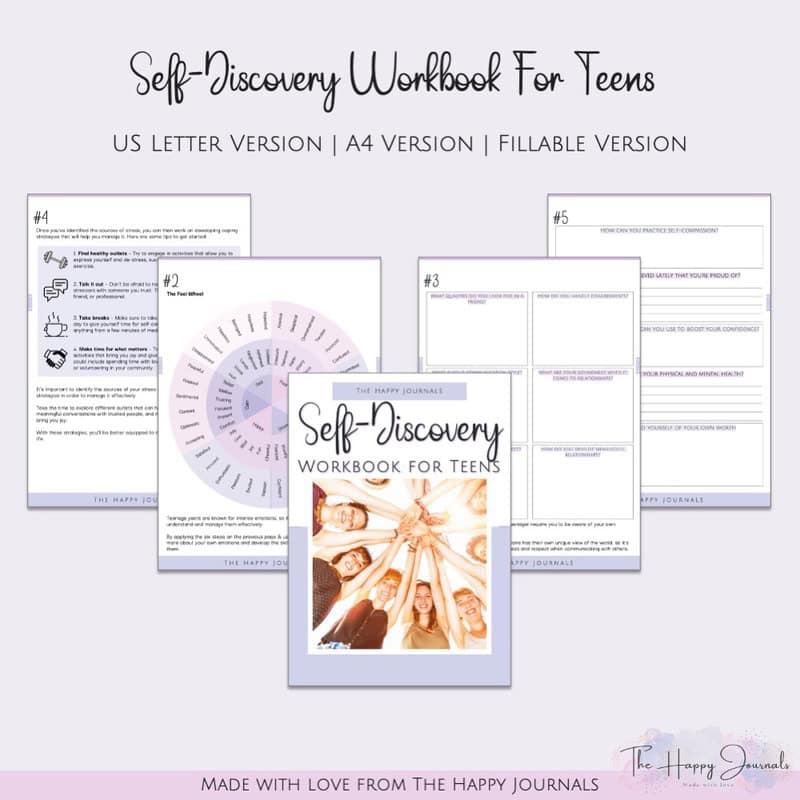
Grab the Self-Discovery Workbook For Teens
This workbook has been designed to guide your teens through a process of self-discovery and to help them gain an understanding of themselves.
In this workbook, we will explore topics including: Setting boundaries, your emotions, positive relationships, identifying stressors, knowing your worth, exploring strengths and weaknesses, and success goals.
Choosing the Right Journal
So, you’ve decided to start a journal for school—awesome! But now you’re probably wondering, what kind of journal should I use? Don’t worry; I’ve got you covered. There are many different types of journals out there, and the key is to find one that fits your style and needs. Let’s break it down:
- Lined Journals: Great for those who prefer structure. They are perfect for traditional writing and keeping your thoughts organised.
- Blank Journals: Ideal for the creative souls out there. This is your go-to if you like to doodle, sketch, or write freely without lines.
- Digital Journals: Perfect for tech-savvy students. Apps like Day One Journal or Journey allow you to journal on the go and even sync across devices.

Here are some tips to help you select the right journal:
- Consider Your Writing Style: A lined journal might be best if you write a lot. For more artistic or random thoughts, a blank journal could be better.
- Think About Portability: If you plan to take your journal to school, make sure it’s a size that fits easily in your backpack.
- Digital vs. Physical: A digital journal might be more convenient if you’re always on your phone or laptop. But if you enjoy the tactile experience of writing, go for a physical journal.
Need some recommendations? Here are a few of my favourites:
- A5 Dotted Paper Journals from the Buke store
- B5 style soft leather journals by ZenART
- Day One Journal App: A top choice for digital journaling with many features.
Choosing the right journal for you can make it easier to stay consistent and enjoy the process. So take your time, explore your options, and pick one that feels right.
Setting Up Your Journal
This creates a cosy space for your thoughts, ideas, and school stuff. Setting up your journal properly can help you stay organised and make the most out of your journaling experience. Here’s a simple step-by-step guide to get you started:
- Date Each Entry: Always begin by dating your entries. This will help you track your progress and find specific entries later.
- Create Sections for Different Subjects or Themes: Divide your journal into sections for different subjects or themes. For example, you could have a section for math notes, another for personal reflections, and one for creative writing prompts.
- Include a Table for Tracking Assignments or Goals: A table can be handy for keeping track of assignments, due dates, and goals.
Need some layout inspiration? Check out these examples:
- Bullet Journal Layouts: Perfect for those who love structure and creativity.
- Pinterest Journal Layouts: Tons of visual inspiration to spark your creativity.
Remember, there’s no right or wrong way to set up your journal. It’s all about what works best for you. Here’s a great quote from a teacher to keep in mind:
“Organisation is the key to success in journaling. A well-structured journal helps you keep track of your assignments and provides a clear space for reflection and creativity.” – Mrs. Thompson, High School English Teacher.

How to start a journal for school
Now that your journal is set up let’s look at some practical tips to help you make the most of your journaling experience. These tips can transform your journal from just a notebook into a powerful tool for personal growth and creativity.
- Write Regularly (Daily or Weekly): Consistency is key! Whether you write every day or just once a week, find a routine that works for you. I personally love to write in the morning with my coffee; it sets a positive tone for the day. You might prefer evenings to reflect on your day. Whatever you choose, stick to it!
- Keep Entries Concise and Focused: Your journal is personal, so there’s no need to write a novel. Keeping your entries short and focused helps you stay engaged and makes it easier to reflect on your thoughts later. Aim for a few sentences or paragraphs that capture your feelings or experiences.
- Use Prompts to Inspire Writing: Sometimes, we all hit a wall and don’t know what to write about. This is where journal prompts come in handy! They can spark your creativity and give you somewhere to start. For example, you might write about a challenge you faced this week or something you’re grateful for. If you need some ideas, check out this resource with journaling prompts for students.
- Don’t Worry About Grammar or Spelling—Just Write! One of the best parts about journaling is that it’s for your eyes only. So, let go of the pressure to write perfectly. Focus on expressing your thoughts and feelings. I remember being so caught up in making everything perfect that I did not write at all. Once I let go of that mindset, my journaling became much more enjoyable. May be try these fun topics to remove the pressure.

Now, let’s talk about overcoming writer’s block. I once sat down to write and found myself staring at a blank page for an eternity. It was frustrating. Then I remembered a simple advice: ‘Just start writing anything.’ So, I began by jotting down my thoughts about the weather, my favourite song, or even what I had for lunch. Before I knew it, I was in the flow and writing pages. The key is to start, even if it’s just a sentence or two.
Another tip is to experiment with different writing styles. You might find that some days, you want to write more poetically, while other days, a straightforward narrative works better. Embrace the variety. You can even try keeping different types of journals—like a mood journal to track your feelings or a creative writing journal for your stories and ideas. There’s no reason why you couldn’t even have a Halloween journal (try these Halloween prompts).
And don’t forget to reflect on your entries from time to time. Reading your past journal entries can be a helpful way to see how you’ve grown and changed.
Lastly, make it fun! Decorate your journal with stickers, drawings, or even photos. This can make the process more enjoyable and encourage you to write more often.

Maintaining Your Journal
Now that you’ve started your journal, the next step is to keep the momentum going. Maintaining a journal consistently can be challenging, but with a few tips and some dedication, you’ll find it a rewarding habit. Here are some practical suggestions to keep your journal active and beneficial:
- Set Reminders to Write: Life can get busy, and it’s easy to forget to jot down your thoughts. Setting up reminders on your phone be super useful. Whether it’s a daily or weekly alert, a gentle nudge can help you stay on track. I use Sansuma to schedule my writing time, which works wonders. This post will give you some tips for your journaling schedule.
- Find a Quiet Space for Journaling: Having a dedicated space for your journaling can make a huge difference. Find a quiet corner in your home or a favourite spot in a local park. The key is to have a place to focus and feel comfortable. My go-to spot is a cosy chair by the window to enjoy natural light.
- Reflect on Past Entries to See Growth and Changes: One of the joys of journaling is looking back on your past entries. It’s amazing to see how much you’ve grown and changed over time. Make it a habit to read previous entries every few months. It’s a great way to reflect on your journey and gain new insights into your growth.
Wrapping Up How to Journal for Teens
Starting a journal for school can be one of the best decisions you can make for your academic and personal growth. Journaling helps improve writing skills and enhances organisation, emotional expression, and self-reflection. By making journaling a regular habit, you’ll notice positive changes in your thinking and creativity over time.
Grab a journal that suits your style, whether a cute journal, a digital journaling option, or even a simple notebook. Start with small, manageable steps; remember, there are no strict rules—your journal is your personal space.
To help you get started and keep the momentum, check out these fantastic resources:
- The Artist’s Way by Julia Cameron – Unlock your creativity with ‘Morning Pages’.
- The Bullet Journal Method by Ryder Carroll – A method for time management and goal setting.
- A Writer’s Diary: Virginia Woolf – Get inspired by reading famous journals.
Starting a journal for school is about finding what works best for you and making it a part of your routine.
Grab the Self-Discovery Workbook For Teens
This workbook has been designed to guide your teens through a process of self-discovery and to help them gain an understanding of themselves.
In this workbook, we will explore topics including: Setting boundaries, your emotions, positive relationships, identifying stressors, knowing your worth, exploring strengths and weaknesses, and success goals.
Disclosure: If you purchase anything from links in this post or any other, I may receive some kind of affiliate commission. However, I only ever mention products I love and would recommend regardless of commission.
Disclosure: I’m not a mental-health or medical expert, I just share what I’ve learned through my own research and experience. The ideas and prompts here are meant to help you reflect and grow, but they’re not a replacement for professional advice. You can read my full disclaimers here.